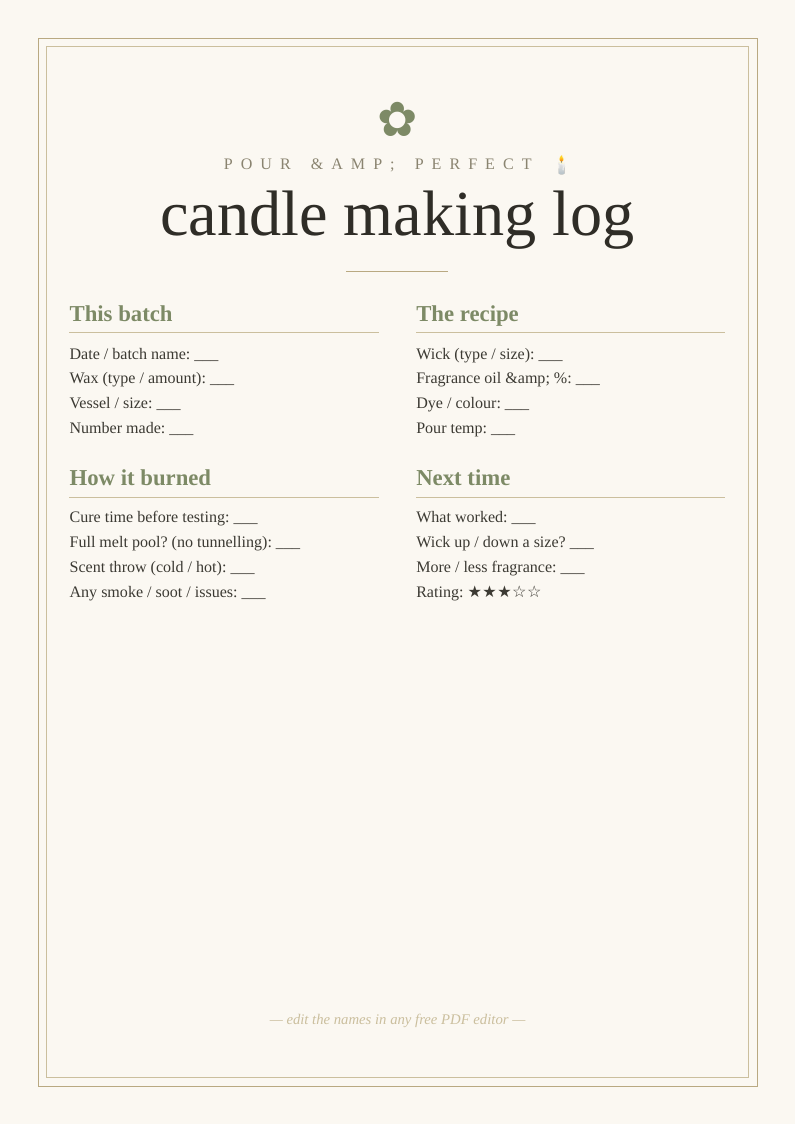
What you get
Designed to look bought, priced at nothing
Three print sizes
A2 and A3 for home printers, plus 18×24" for a print shop or easel.
Fully editable
Change the wording in any free PDF editor — no design software needed.
High-resolution
Crisp 300 DPI vector text that stays sharp at poster size.
How to use it
From download to display in three steps
- Personalise. Open the PDF in Canva, Acrobat online or Apple Preview and edit the text.
- Print. Heavyweight matte card at home for A3 and under; a print shop for 18×24".
- Display. Frame it or stand it on an easel at your .
Top picks compared
| Pick | What you'll want | Best for | |
|---|---|---|---|
| Top pick | A4 heavyweight matte card | Recipe log | Check price → |
| Candle kit | Candle making kit soy wax wicks fragrance beginners set | Get started | Check price → |
| Thermometer | Candle making thermometer wax temperature pouring digital | Get it right | Check price → |
As an Amazon Associate we earn from qualifying purchases. Prices shown on Amazon at time of click.
Frequently asked questions
Why keep a candle making log?
Candle making looks simple but is surprisingly technical — getting a clean, even burn with good scent throw depends on dialling in the right combination of wax, wick size, fragrance load and pour temperature for your vessel, and small changes make a big difference. A log lets you record each batch's 'recipe' and exactly how it performed (did it form a full melt pool or tunnel down the middle? was the scent strong enough? did it smoke or soot?), so you can troubleshoot systematically rather than guessing. The classic candle problems — tunnelling usually means the wick's too small for the vessel, sooting often means it's too big — become solvable when you can see what you changed between batches. It means you can confidently repeat the candles you love and improve the ones you don't. It's also essential record-keeping if you ever sell your candles, where consistency and safety matter. Always follow safety guidance for working with hot wax and fragrance oils, and test-burn candles before selling or gifting.
Is it really free?
Yes — no email, no sign-up.
Can I print it more than once?
Yes — print as many copies as you need.