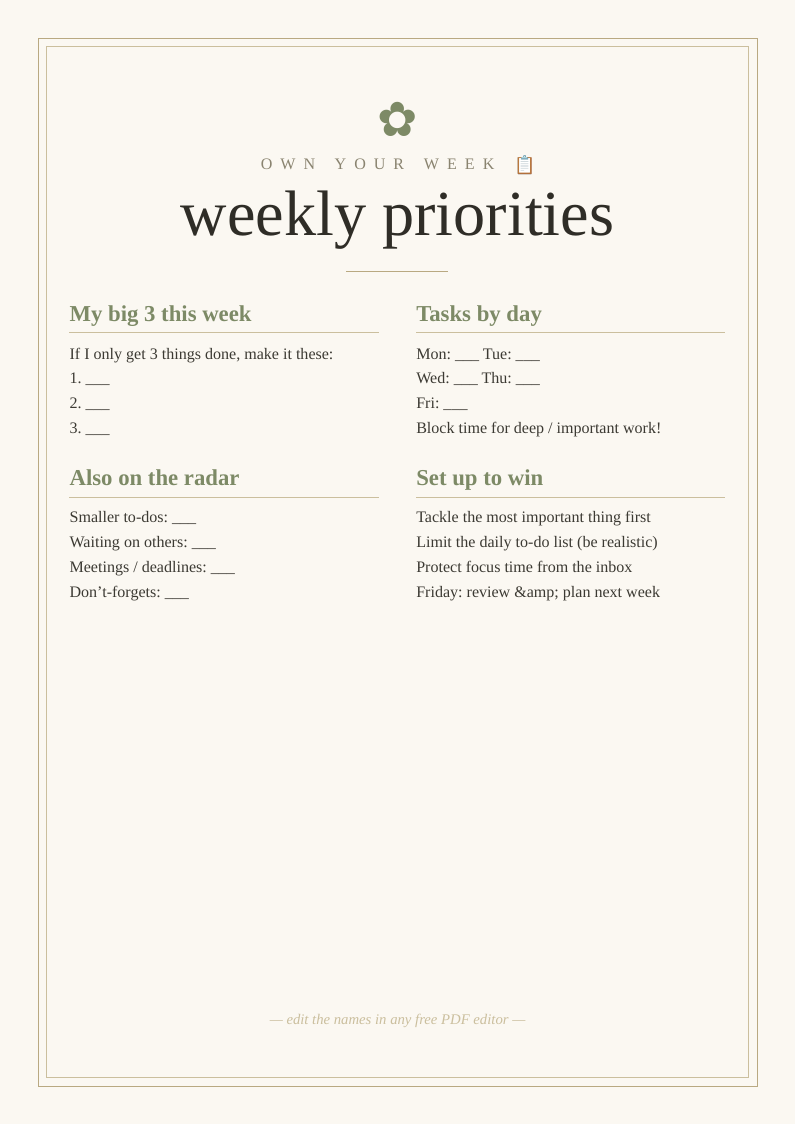
What you get
Designed to look bought, priced at nothing
Three print sizes
A2 and A3 for home printers, plus 18×24" for a print shop or easel.
Fully editable
Change the wording in any free PDF editor — no design software needed.
High-resolution
Crisp 300 DPI vector text that stays sharp at poster size.
How to use it
From download to display in three steps
- Personalise. Open the PDF in Canva, Acrobat online or Apple Preview and edit the text.
- Print. Heavyweight matte card at home for A3 and under; a print shop for 18×24".
- Display. Frame it or stand it on an easel at your .
Top picks compared
| Pick | What you'll want | Best for | |
|---|---|---|---|
| Top pick | A4 heavyweight matte card | Weekly planner | Check price → |
| Planner pad | Weekly desk planner pad tear off work productivity undated | On your desk | Check price → |
| Productivity book | Productivity book focus deep work time management UK | Focus more | Check price → |
As an Amazon Associate we earn from qualifying purchases. Prices shown on Amazon at time of click.
Frequently asked questions
How do you plan a productive work week?
Productive weeks are usually driven, not reactive — the difference between deciding what matters and making it happen, versus simply responding to whatever lands in your inbox. A simple weekly planning habit, done at the start of the week (or end of the previous one), makes a big difference. The core move is to identify your top priorities first: ask 'if I only get three important things done this week, what should they be?' and protect those, because a handful of genuinely important things completed beats a long list half-done. Then map your tasks to days realistically, and crucially block out time for focused, important work rather than leaving it to be squeezed out by meetings and emails — the most important work rarely gets done in the gaps. Keep your daily to-do lists short and achievable so you end the day with a sense of progress rather than failure, and tackle the most important or daunting task early when your energy's highest. Note what you're waiting on others for, and your meetings and deadlines, so nothing's forgotten. Finally, a quick Friday review — what got done, what rolls over — sets you up to start the next week with clarity. Planning the week takes ten minutes and repays it many times over.
Is it really free?
Yes — no email, no sign-up.
Can I print it more than once?
Yes — print as many copies as you need.