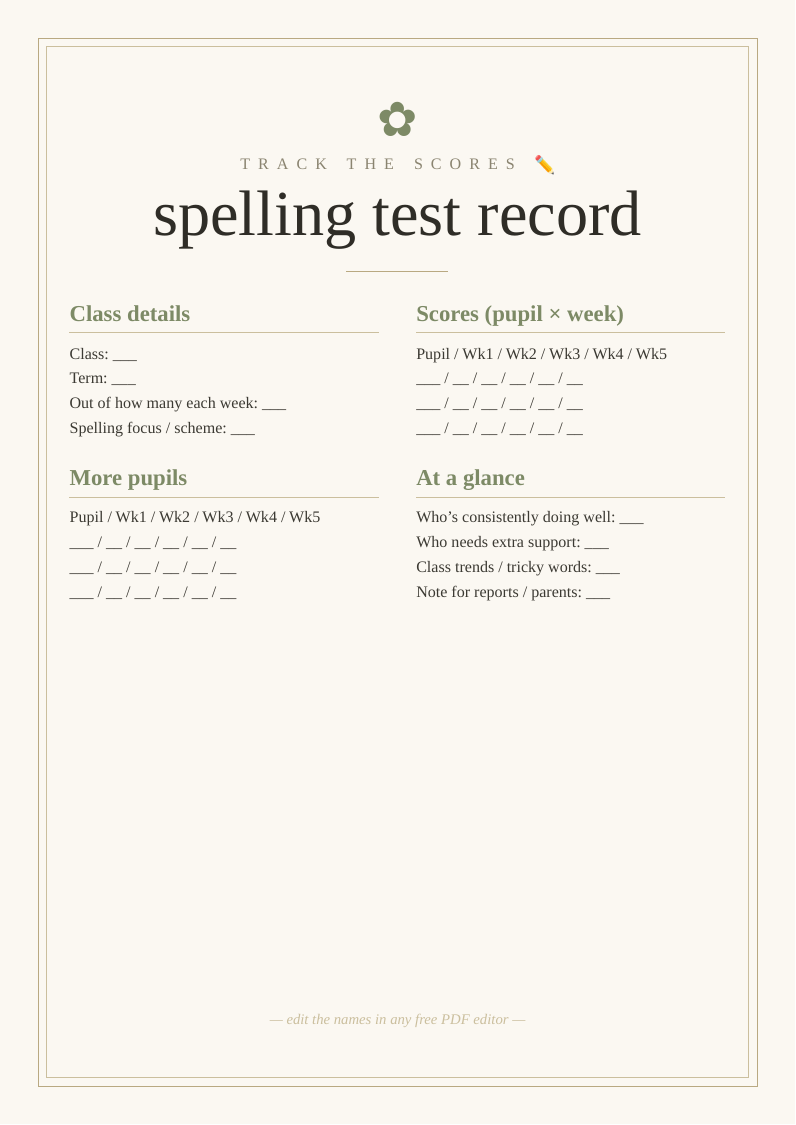
What you get
Designed to look bought, priced at nothing
Three print sizes
A2 and A3 for home printers, plus 18×24" for a print shop or easel.
Fully editable
Change the wording in any free PDF editor — no design software needed.
High-resolution
Crisp 300 DPI vector text that stays sharp at poster size.
How to use it
From download to display in three steps
- Personalise. Open the PDF in Canva, Acrobat online or Apple Preview and edit the text.
- Print. Heavyweight matte card at home for A3 and under; a print shop for 18×24".
- Display. Frame it or stand it on an easel at your .
Top picks compared
| Pick | What you'll want | Best for | |
|---|---|---|---|
| Top pick | A4 heavyweight matte card | Score record | Check price → |
| Folder | A4 ring binder dividers teacher assessment records organiser | Organise | Check price → |
| Stickers | Reward stickers children spelling classroom motivation pack | Reward | Check price → |
As an Amazon Associate we earn from qualifying purchases. Prices shown on Amazon at time of click.
Frequently asked questions
How do you track spelling test scores?
A simple spelling record — pupils down one side, weeks across the top — gives a teacher an at-a-glance picture of the whole class's spelling progress over a term, which is far more useful than scores scattered through a mark book. The grid format lets you quickly spot the patterns that matter: which children are consistently doing well, which are struggling and need extra support or intervention, and whether the class as a whole is progressing or finding particular weeks' words tricky. This kind of overview feeds directly into your teaching — helping you pitch the spelling lists right, identify who needs targeted help, and group children appropriately. It's also a handy evidence base when writing reports or talking to parents at parents' evening, as you can speak to a child's progress over time rather than a single snapshot. To keep it manageable, record the score (out of however many) each week, and add a brief notes section for trends, persistently tricky words, and any children to flag. Keeping it consistent and quick to fill in is key — the value is in the overview it builds with minimal effort. It's one of those small organisational tools that saves teacher time and makes assessment information genuinely useful rather than just collected.
Is it really free?
Yes — no email, no sign-up.
Can I print it more than once?
Yes — print as many copies as you need.