What you get
Designed to look bought, priced at nothing
Three print sizes
A2 and A3 for home printers, plus 18×24" for a print shop or easel.
Fully editable
Change the wording in any free PDF editor — no design software needed.
High-resolution
Crisp 300 DPI vector text that stays sharp at poster size.
How to use it
From download to display in three steps
- Personalise. Open the PDF in Canva, Acrobat online or Apple Preview and edit the text.
- Print. Heavyweight matte card at home for A3 and under; a print shop for 18×24".
- Display. Frame it or stand it on an easel at your .
Top picks compared
| Pick | What you'll want | Best for | |
|---|---|---|---|
| Top pick | A4 heavyweight matte card | Composting guide | Check price → |
| Compost bin | Compost bin garden large outdoor plastic | Start composting | Check price → |
| Caddy | Kitchen compost caddy countertop with lid | Collect scraps | Check price → |
As an Amazon Associate we earn from qualifying purchases. Prices shown on Amazon at time of click.
Frequently asked questions
How do you start composting at home?
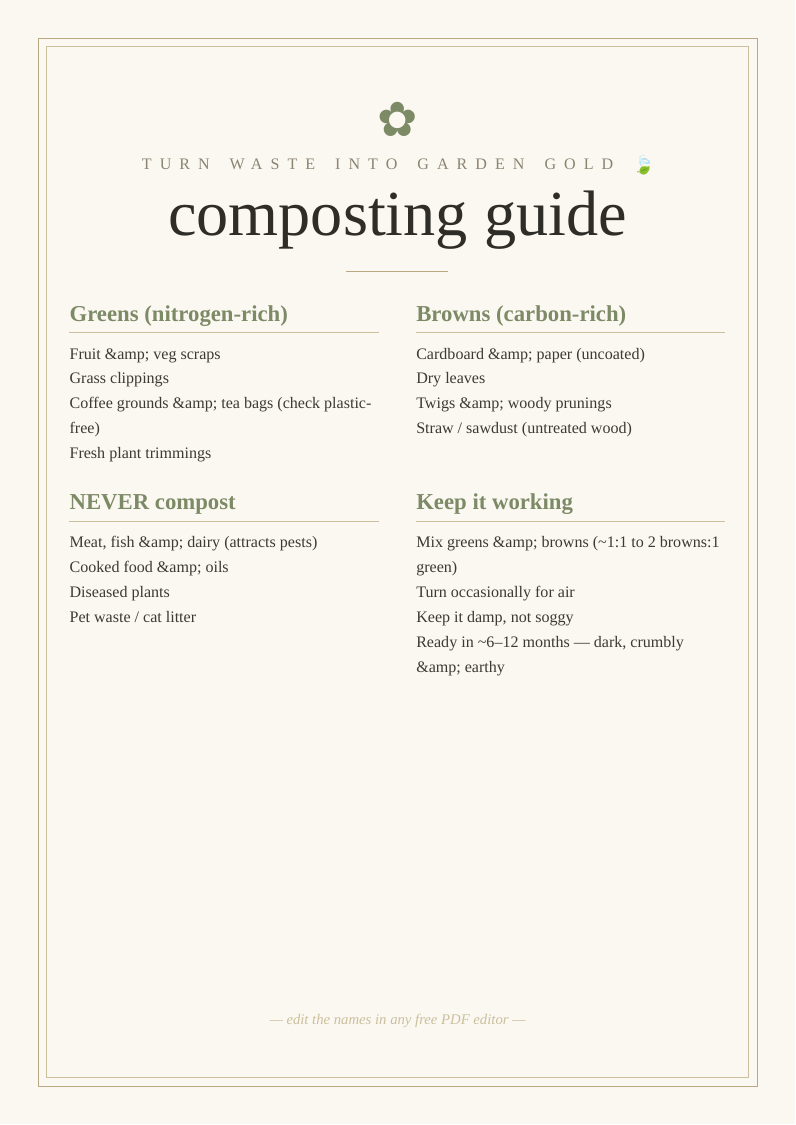
Composting is one of the most rewarding and sustainable things a gardener can do — turning kitchen and garden waste that would otherwise go to landfill into rich, free compost that improves your soil. The basic principle is balancing two types of material: 'greens', which are nitrogen-rich and include fruit and veg scraps, grass clippings, coffee grounds and fresh plant trimmings; and 'browns', which are carbon-rich and include cardboard, dry leaves, twigs and untreated wood shavings. A rough ratio of around one part greens to one or two parts browns keeps the compost balanced — too many greens and it becomes smelly and slimy; too many browns and it breaks down very slowly. Some things should never go in a home compost bin: meat, fish, dairy and cooked food or oils attract pests and create odour problems, diseased plant material can spread disease back into your garden, and pet waste shouldn't go in compost destined for food-growing areas. To keep the process working, turn the compost occasionally to introduce air (which speeds decomposition and prevents it becoming an airless, smelly mess), and keep it damp but not waterlogged — like a wrung-out sponge. Compost typically takes anywhere from around six months to a year to fully break down into the dark, crumbly, earthy-smelling material that's ready to use, though this varies with the size of your bin, the materials used, and the weather. The result is genuinely valuable for your garden — improving soil structure, adding nutrients, and helping retain moisture — while meaningfully reducing the amount of waste your household sends to landfill. A simple compost bin or heap is all you need to get started.
Is it really free?
Yes — no email, no sign-up.
Can I print it more than once?
Yes — print as many copies as you need.