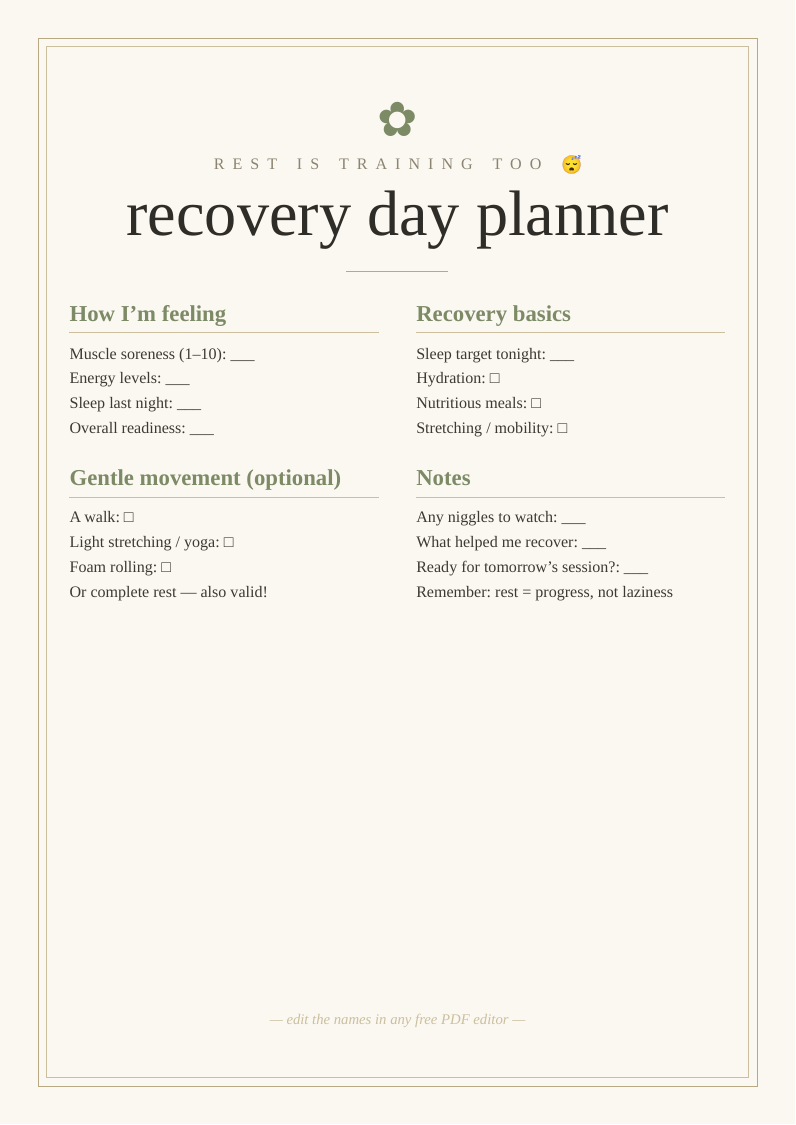
What you get
Designed to look bought, priced at nothing
Three print sizes
A2 and A3 for home printers, plus 18×24" for a print shop or easel.
Fully editable
Change the wording in any free PDF editor — no design software needed.
High-resolution
Crisp 300 DPI vector text that stays sharp at poster size.
How to use it
From download to display in three steps
- Personalise. Open the PDF in Canva, Acrobat online or Apple Preview and edit the text.
- Print. Heavyweight matte card at home for A3 and under; a print shop for 18×24".
- Display. Frame it or stand it on an easel at your .
Top picks compared
| Pick | What you'll want | Best for | |
|---|---|---|---|
| Top pick | A4 heavyweight matte card | Recovery planner | Check price → |
| Foam roller | Foam roller muscle recovery massage fitness | Recover | Check price → |
| Fitness journal | Fitness journal workout tracker gym log undated UK | Track it all | Check price → |
As an Amazon Associate we earn from qualifying purchases. Prices shown on Amazon at time of click.
Frequently asked questions
Why is rest important for fitness progress?
Rest and recovery aren't a break from training — they're an essential part of it, because the actual physical adaptations that make you fitter and stronger (muscle repair and growth, energy system recovery, nervous system recovery) happen during rest, not during the workout itself. Training creates the stimulus for improvement, but it's during recovery that your body actually rebuilds and adapts; without adequate rest, you're piling stress on stress without giving your body the chance to improve, which can lead to a frustrating plateau, increased injury risk, and overtraining (persistent fatigue, declining performance, disrupted sleep and mood). A recovery day typically includes prioritising sleep (where much of the physical repair happens), good nutrition to fuel recovery, proper hydration, and either complete rest or gentle movement like walking, light stretching or yoga, depending on how your body feels — both complete rest and gentle 'active recovery' are valid, and which is right depends on the person and the training load. Listening to your body matters: tracking things like muscle soreness, energy and sleep helps you notice when you need more recovery, rather than pushing through fatigue. Building planned rest days into your training schedule, rather than only resting when forced to by injury or exhaustion, is what allows consistent long-term progress. Treating recovery as genuinely part of training — not an indulgence or something to feel guilty about — is one of the biggest mindset shifts that helps people train sustainably and see better results.
Is it really free?
Yes — no email, no sign-up.
Can I print it more than once?
Yes — print as many copies as you need.