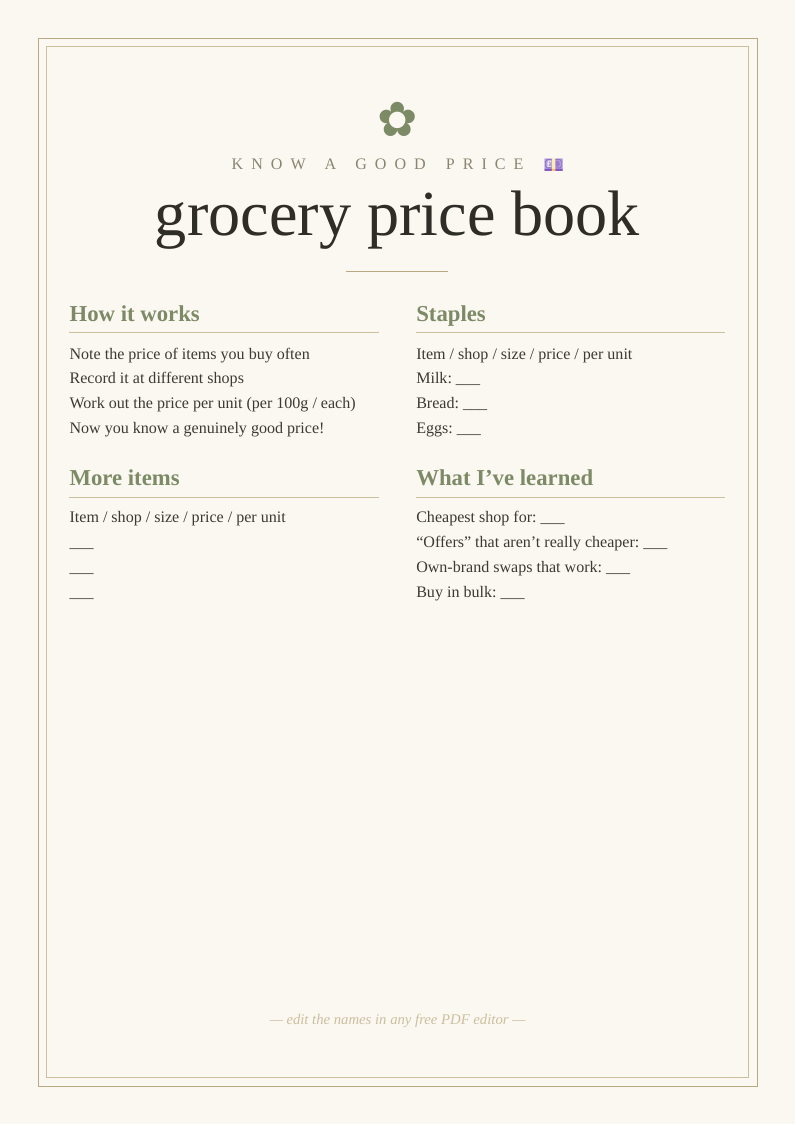
What you get
Designed to look bought, priced at nothing
Three print sizes
A2 and A3 for home printers, plus 18×24" for a print shop or easel.
Fully editable
Change the wording in any free PDF editor — no design software needed.
High-resolution
Crisp 300 DPI vector text that stays sharp at poster size.
How to use it
From download to display in three steps
- Personalise. Open the PDF in Canva, Acrobat online or Apple Preview and edit the text.
- Print. Heavyweight matte card at home for A3 and under; a print shop for 18×24".
- Display. Frame it or stand it on an easel at your .
Top picks compared
| Pick | What you'll want | Best for | |
|---|---|---|---|
| Top pick | A4 heavyweight matte card | Price book | Check price → |
| Notebook | Pocket notebook small spiral shopping budget notes | On the go | Check price → |
| Budget book | Budget planner book UK groceries food shop tracker undated | Track spend | Check price → |
As an Amazon Associate we earn from qualifying purchases. Prices shown on Amazon at time of click.
Frequently asked questions
What is a grocery price book and does it save money?
A price book is a record of what the items you buy regularly actually cost — ideally noted across the different shops you use, and worked out as a price per unit (per 100g, per litre, or each) so you can compare fairly regardless of pack size. It saves money because, once you've tracked your staples for a few weeks, you genuinely learn what a good price is — which means you can recognise a real bargain, see through 'offers' that aren't actually cheaper, and know which shop is best for what. It's especially powerful for spotting that bigger packs or own-brands aren't always cheaper per unit, and that supermarket 'deals' sometimes cost more than the standard price elsewhere. It takes a little effort upfront, but for regular purchases it pays off all year. Pair it with meal planning and a list to keep the food bill down. This is general information, not financial advice.
Is it really free?
Yes — no email, no sign-up.
Can I print it more than once?
Yes — print as many copies as you need.